Turnitin Report Flags: What the Numbers Really Mean

The flags in a Turnitin report are the small numbers and labels on matched text. A superscript number points to a source, and each source carries a percentage. Read the flags in that order and the report stops looking like a wall of colour.
The headline percentage
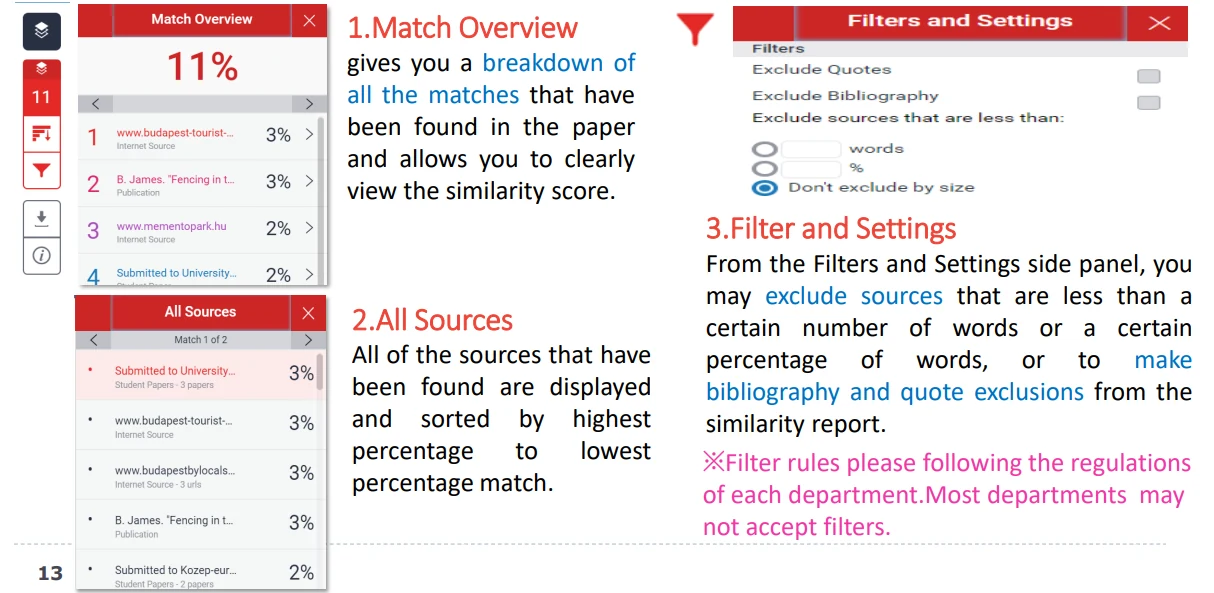
The number at the top is the overall Similarity score: the share of your text that matched anything in the database. It is a total, so it hides how the matches are spread.
Two papers at 30% can be entirely different. One cites six sources correctly; the other holds a single uncited page.
The total also mixes types of text. A quotation, a methods sentence and a reference list each add to the same figure.
Source numbers in the text
Every match carries a number that points to an entry in the source list. Select a highlighted block and the panel shows the source, its percentage, and the matched text.
Each source is also typed as internet, publication or student paper. A student paper entry normally names the institution that submitted it.
The number is only a key. One source can hold several highlighted blocks, so a small number can still cover a lot of text.
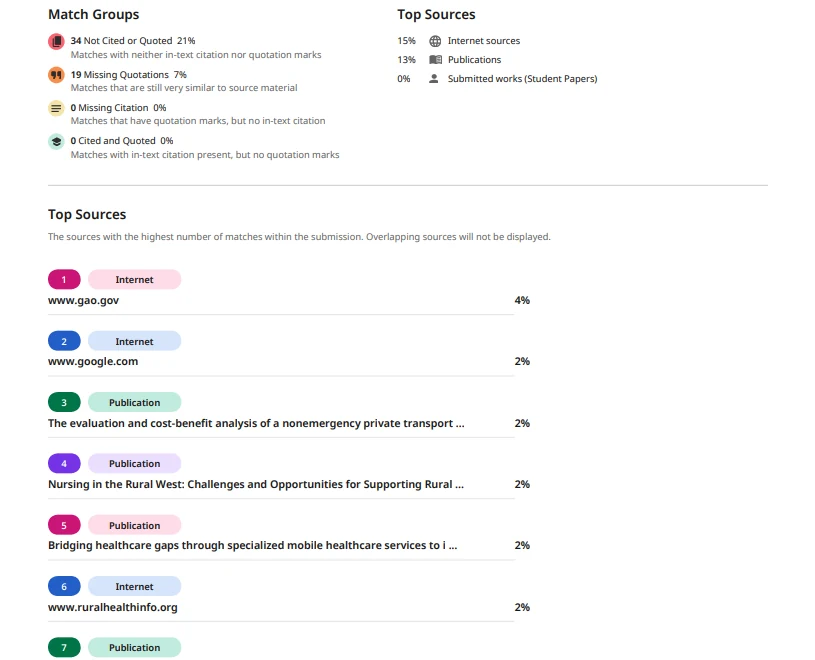
Match Groups
Match Groups sorts matches into three piles. Not Cited means the words match a source you did not reference.
Missing means your wording is close but a quotation mark or citation is absent. Cited means the match is credited.
The first two piles deserve your attention first. A colour band is a rough filter, while Match Groups turns a number into a judgement.
Top Sources lists the same sources with their own percentages, which shows where the weight sits. Ten sources at 2% read very differently from one source at 20%.
Missing matches are the easiest to repair. Add the quotation marks and the full citation, and the same words move from a flag to a cited match.
What the flags cannot settle
A percentage says how much text matched. It cannot say whether the matched sentence was the core argument or a definition every paper uses.
That call needs the marked passage, the source and your citation. Read the block, not only the number.
Reading the report in order
- Check the headline percentage against the number of sources.
- Check Match Groups for uncited and missing matches.
- Check whether filters were applied to the report.
- Check the AI score separately, because it is unrelated.
A filtered report shows a lower percentage than the raw one, and many departments record the unfiltered number. Ask which figure your course uses before you quote either.
The order above is the same one used in how to read a Turnitin similarity report. For the detector side of the same page, see how Turnitin detectors differ.
Run the same pass over the AI section, because a clean similarity score says nothing about machine-written prose. The two figures are calculated independently.
FAQ
What does a superscript number beside highlighted text mean?
It is the key to one source in the source list. Select the number or the block to see that source and the matching passage.
What is the difference between Not Cited and Missing?
Not Cited means the source is not referenced at all. Missing means you referenced it but the quotation marks or the citation format are incomplete.
Does one large match matter more than many small ones?
Often, yes. A single large match usually means a copied block, while many small matches usually mean common phrasing or correct citations.
Check your paper before you submit — you get a similarity score and an AI score in one report.