What Is a Good Turnitin Similarity Score in 2026?

Turnitin does not publish a good similarity score. The company states there is no acceptable or perfect score, and a high percentage does not by itself mean plagiarism. What matters is which sources matched and how much of your argument they cover.
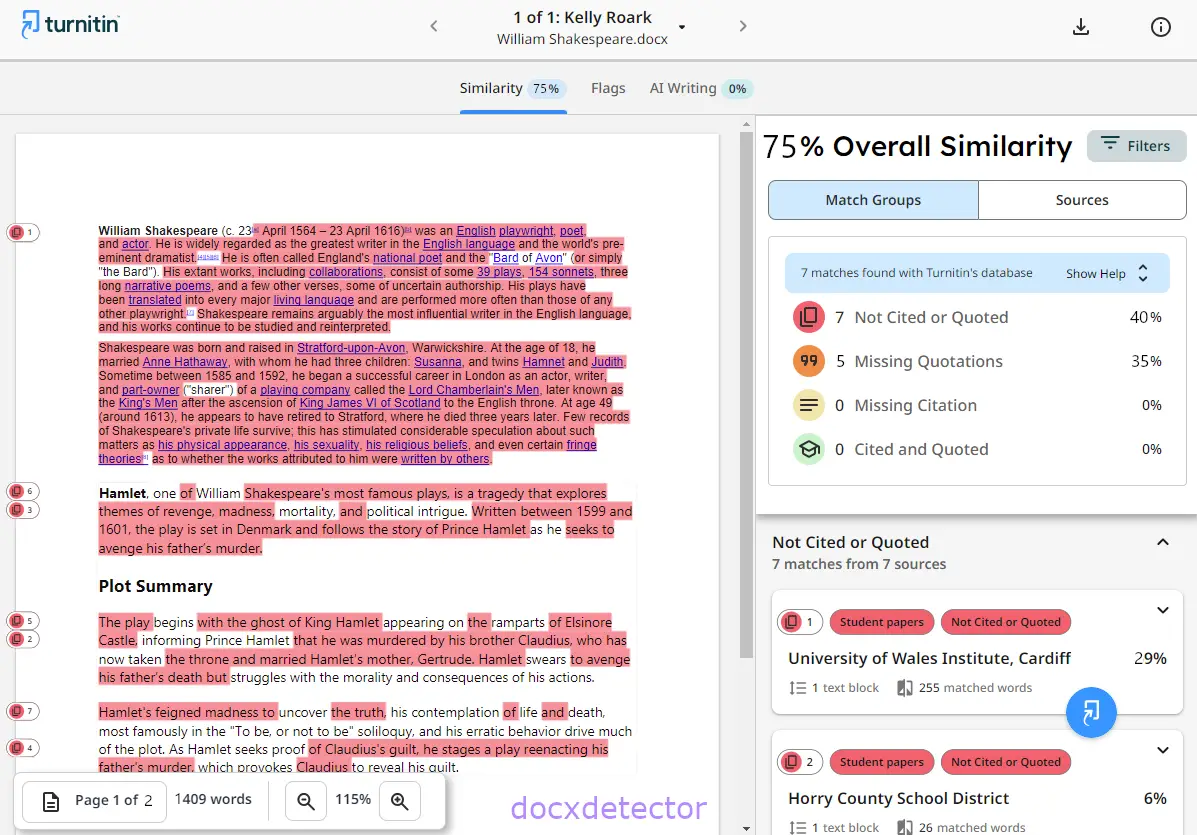
What the Percentage Counts
The score is the share of your text that matches sources in Turnitin's database. That database holds web pages, student papers and journal articles. A match means overlap, not intent.
Short phrases, standard method names and common definitions all count. That is why a carefully cited paper can still show a double-digit figure.
An earlier essay of yours can appear in that list, because student papers sit in the same database. That match surprises people more than any other.
Why There Is No Target Number
A literature review quotes constantly. A lab report barely quotes at all. The same percentage means different things in each case, so one rule cannot cover both.
Many departments set their own cut-off. Ask yours instead of guessing from a blog post.
Turnitin's own answer confirms the point in its similarity score guidance.
Read the Match List First
The total is a summary. The Match Overview and All Sources list show where the overlap sits, and the colour bands are explained in Turnitin colour bands.
One large match to a single paper is a citation question. Many small matches to common phrases are usually nothing.
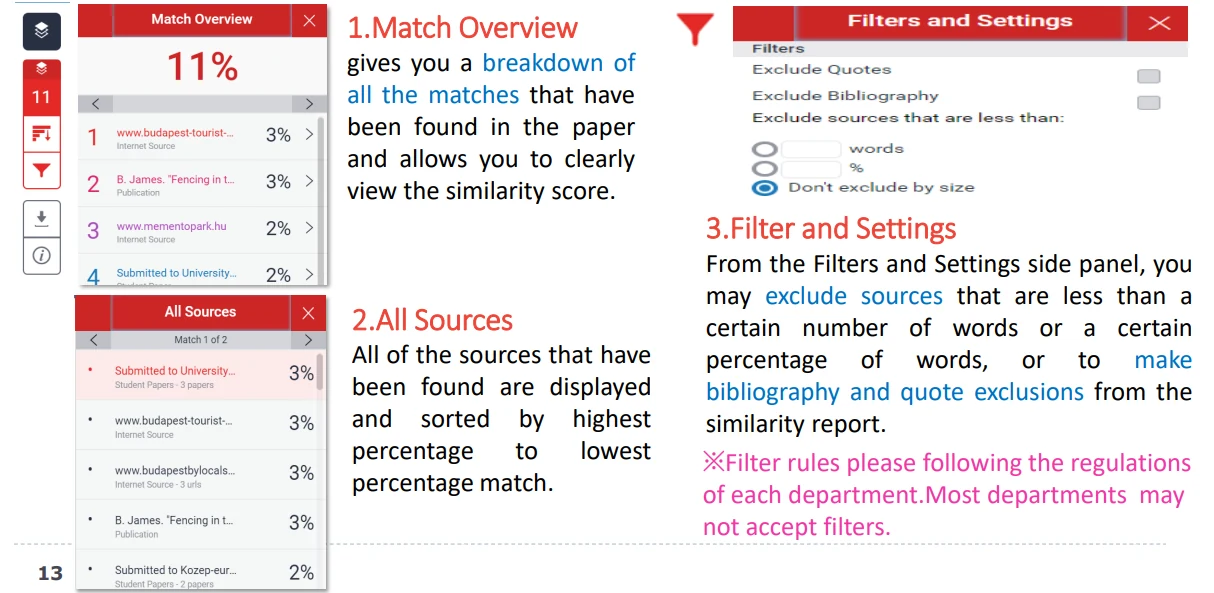
Filters Can Change the Number
Quotes, the bibliography and small matches can be excluded in the Filters and Settings panel. Many departments do not accept a filtered score. Check the rule before you quote the lower number.
Save the unfiltered view as well. It is the version most tutors will open first.
When a Low Score Is Worth Checking
A very low score is not automatically clean. It can mean your sources are missing from the database, or that your paraphrase drifted too far from the original.
Read the sources you cited and compare them with your sentences. If the idea is close but the words changed, cite it properly anyway.
The Turnitin guide covers how the similarity and AI checks fit together.
Reading a Report in Five Minutes
- Note the total, then ignore it until step four.
- Open All Sources and find the largest match.
- Check whether quotes and the bibliography are included.
- Open the two biggest passages and compare them with your text.
That sequence answers the practical question: is this overlap cited or not? The total alone never does.
Why Two Papers With the Same Score Differ
A score built from one long quotation is a citation job. The same figure spread across twenty short matches to common phrases needs no action at all.
That is why comparing totals with classmates wastes time. Compare match lists instead, and look at what each match actually contains.
When to Ask Your Tutor
Ask when the largest match is a source you did not cite, or when a quoted block carries no quotation marks. Those two cases change what you submit.
Do not ask whether your score is too high. Ask which passages they want changed, and bring the report with you.
If your department publishes a cut-off, that figure decides the conversation. This page only explains what the number behind it means.
FAQ
Is 0% similarity a good result?
It is neither good nor bad on its own. It means nothing matched, which can also happen when your sources are not indexed.
Can I lower my score by deleting references?
You can, but that is not the fix. Use the exclusion filters for quotes and the bibliography, then follow your department's rule.
Does a high similarity score mean I plagiarised?
No. Turnitin says a high score does not by itself mean plagiarism. Read the match list to see what actually matched.
Check your paper before you submit — you get a similarity score and an AI score in one report.