Can Turnitin Detect Translated AI Text? What to Expect

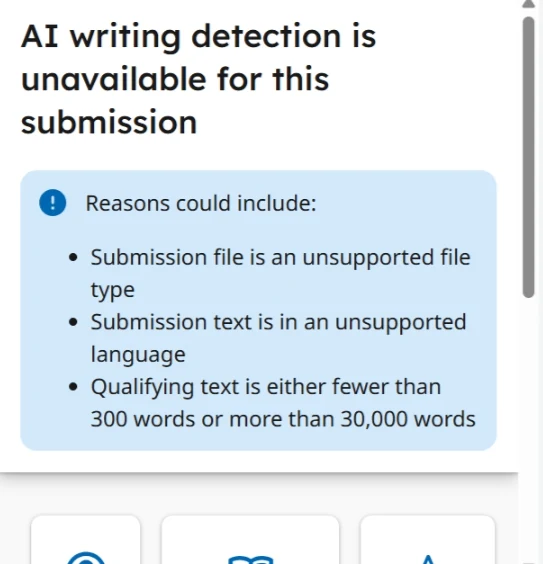
Yes, in most cases. If you translate AI text into one of the seven supported languages and submit it, the detector reads the translated wording and scores it. If you submit in an unsupported language, no AI report is generated at all.
What the Detector Sees
Detection runs on the text you upload, not on its history. The tool cannot tell whether the words came from a translator, a chatbot or your keyboard. It scores the pattern in front of it.
That is why translating is not a hiding step. The translation is the submission, so the translation is what gets scored.
Treat the translated file as a new draft. What you knew about the original stops mattering at upload.
Why Translated Text Still Scores
Machine translation keeps the structure of the source. Sentence lengths stay even, connectors repeat, and phrasing stays literal. That regularity is what the classifier reacts to.
Swapping a few words will not change the rhythm. You have to rebuild the sentences yourself before the pattern moves.
Translation also flattens idioms. A translated paragraph often loses the small irregularities that make human writing look human to a model.
Word-for-word accuracy is the wrong goal for a submission. It is exactly what makes the output predictable.
Language Changes the Answer
Only 7 languages are covered: English, Spanish, Japanese, Arabic, German, Dutch and Turkish. German, Dutch and Turkish were added on 6 October 2026. English is on the list, so a translation into English is always scored.
The supported language list shows the full set.
Only the English detector includes AI paraphrasing and AI-bypasser detection. Spanish and Japanese detectors do not, so the same text can score differently by language.

The Unsupported-Language Gap
Submitting in French, Korean or Portuguese skips the AI panel, not the review. Your instructor still reads the draft, and a missing AI report is visible on the submission.
That gap is not a loophole you can rely on. It moves the judgement to a person who can ask how the text was produced.
A blank AI panel also tells you nothing about quality. How accurate the detector is explains what a score can support.
The AI detection guide covers the report views you should expect in each case.
What Paraphrasing Does to a Translated Draft
Rewriting a translation by hand changes a little. The sentence order usually survives, and so does the paragraph map.
Starting from your own notes changes more. When you build the argument in the target language, the structure belongs to you and the pattern follows.
A useful test: cover the source and explain the paragraph aloud. If you can only repeat the translation, you have not rebuilt it yet.
A Practical Test Before You Upload
Read two consecutive paragraphs and count the sentences that start the same way. Even openings across a page are the pattern detectors score.
Then check the word count. A translation can push a short draft under 300 words, and then no AI report runs at all.
What to Do Instead
- Write the argument in your own words in the target language first.
- Keep the source text beside your draft and cite it.
- Check the AI score before the deadline, while you can still revise.
A translated paragraph you rebuilt from notes behaves like your own writing. A copied translation keeps its shape, and the shape is what gets flagged.
FAQ
Does translating AI text hide it from Turnitin?
No, not usually. The detector scores the translated English you submit, and machine translation leaves a regular pattern.
What if I translate into a language Turnitin does not support?
Then no AI report is generated. The similarity check still runs on the submitted text.
Does the AI score know the text was translated?
No. It scores the likelihood of machine generation, not the route the text took to reach you.
Check your paper before you submit — you get a similarity score and an AI score in one report.